SC Rules In Favour Of Crypto Trading In India

Featured

The Supreme Court on Wednesday struck down the curb on cryptocurrency trade in India put up by the RBI.

ETNow reported quoting:

“SC rules curb on crypto currency trade illegal,” the report said while adding that the order lifted ban on trading in virtual currency, cryptocurrency and bitcoins.

Bitcoin, the most valued cryptocurrency in the world, was down 0.39 per cent at $8,815. The market cap of the currency stood at $161 billion.

The Reserve Bank of India had virtually banned cryptocurrency trading in India as in a circular issued on April 6, 2018, it directed that all entities regulated by it shall not deal in virtual currencies or provide services for facilitating any person or entity in dealing with or settling those.

Regulated entities that were already providing such services were told to exit the relationship within three months. The RBI had earlier issued circulars cautioning users, holders and traders of virtual currencies, including bitcoins, regarding various risks associated in dealing with such virtual currencies. The April 6 circular was later challenged in the top court.

The Internet and Mobile Association of India, representing various cryptocurrency exchanges, had argued that trading in cryptocurrencies in the absence of a law banning those was a “legitimate” business activity under the Constitution. The RBI could not have denied them access to banking channels to carry on such business, it said.

The central bank defended in the Supreme Court its 2018 circular maintaining that it had constantly been unswerving in its disapproval to allowing any other payments systems and undermining the veracity of the banking system.

It contended that though there was no formal ban on cryptocurrencies under any law in presence in India, it had unswervingly been cautioning all those trading with virtual currencies of the risks integral to them.

Weekly Cryptocurrency News Update

Featured

Bitcoin To Hit $100K In 2025, Says Justin Sun, Founder Of Tron

Justin Sun, the founder and CEO of Tron (TRX), the 15th biggest cryptocurrency by market cap, is investing in a number of cryptos other than Bitcoin (BTC).

In a Feb. 23 interview with CNN, Tron CEO said that he is a long-term believer in cryptocurrencies and owns a stake in many altcoins, including the two largest coins after Bitcoin — Ether (ETH) and XRP.

Iranian Cell Calls For The Use Of Cryptocurrency

This week an Iranian general called for a unique way to bypass the sanctions on his country enforced by the United States.

Saeed Muhammad, commander of the Islamic Revolutionary Guard Corps, called for Iran to use cryptocurrencies to evade the economic sanctions. According to the Telegram channel of Coinit.ir, a crypto news organization based in Iran, the general addressed a crowd on Feb. 26 (translated from Farsi):

“We are demanding the creation of a more sophisticated mechanism to bypass sanctions. To circumvent sanctions, we must develop solutions such as the exchange of products and the use of cryptocurrencies with our partnerships [in other countries].”

Lawsuit Alleging Ripples XRP Moves Forward

A United States federal district court has decided to allow a lawsuit alleging that Ripple’s XRP crypto asset is an unregistered security.

Court documents filed on Feb. 26 reveal that Judge Phyllis Hamilton of the Court of the Northern District of California ruled to only partially grant Ripple’s motion to dismiss the lawsuit against it.

The lawsuit in question was initiated in August 2019 by XRP investor Bradley Sostack, who alleges that the firm misled investors and sold XRP as an unregistered security in violation of federal law.

Binance’s CZ Overtakes Bitmain Co-founder In New Hurun Rich List

While China now has more billionaires than the United States and India combined, Binance CEO might have more money than any crypto person, a new report says.

Binance CEO Changpeng Zhao has overtaken a co-founder of cryptocurrency mining giant Bitmain in the latest Hurun Global Rich List, an annual ranking of the world’s biggest billionaires published Chinese media Hurun Report.

Issued on Feb. 26, the new Hurun Report’s list of 2,816 global billionaires includes six individuals who made their fortune from blockchain and crypto industry.

South Korean Tax Policy Association Proposes Two Step Tax On Cryptocurrencies

Wooden house figurine and money bag with a dollar symbol. Budget, subsidized funds. Mortgage loan for purchase housing, construction or modernization. Tax, building maintenance.

South Korean tax experts have advised the Korean government to apply a low-level trading tax on cryptocurrency profits before subjecting citizens to a transfer income tax, according to a Business Korea report. The Korean government is expected to announce its tax reform plan in late 2020.

The low-level trading tax was recommended because there is a lack of legal infrastructure to enact transfer taxation.

During a seminar on Feb. 21, members of the Korean Tax Policy Association advised the South Korean government to enact this two-step plan, arguing that taking a deliberative approach to implementing a cryptocurrency income tax will be most effective.

Explained: Blockchain Oracles

Featured

Oracles feed the smart contract with external information that can trigger predefined actions of the smart contract. This external data stems either from so ware (Big-data application) or hardware (Internet-of-Things). Such a condition could be any data, like weather temperature, successful payment, or price fluctuations. However, it is important to note that a smart contract does not wait for the data from an outside source to flow into the system. The contract has to be invoked, which means that one has to spend network resources for calling data from the outside world. This induces network transaction costs. In the case of Ethereum, this would be “gas.”

There are different types of oracles:

  • Software Oracles
    handle information data that originates from online sources, like temperature, prices of commodities and goods, flight or train delays, etc. The so ware oracle extracts the needed information and pushes it into the smart contract.
  • Hardware Oracles
    Some smart contracts need information directly from the physical world, for example, a car crossing a barrier where movement sensors must detect the vehicle and send the data to a smart contract, or RFID sensors in the supply chain industry.
  • Inbound Oracles
    provide data from the external world.
  • Outbound Oracles
    provide smart contracts with the ability to send data to the outside world. An example would be a smart lock in the physical world, which receives payment on its blockchain address and needs to unlock automatically.
  • Consensus-based Oracles
    get their data from human consensus and prediction markets like Augur and Gnosis. Using only one source of information could be risky and unreliable. To avoid market manipulation, prediction markets implement a rating system for oracles. For further security, a combination of different oracles may be used, where, for example, three out of ve oracles could determine the outcome of an event.
  • Blockchain Oracles

A blockchain oracle is a third-party information source that has the sole function of supplying data to blockchains which permit for the creation of smart contracts. A smart contract at a fundamental level is simply a self-executing piece of code; smart contracts evaluate incoming data from an oracle and initiate a flow of execution depending on the information received.

To conclude, blockchain oracles are a third-party information source that supply data to smart contracts. They increase the scope of what blockchain protocols can do by providing a means for them to communicate outside of their own network.

Oracles require a level of trust that is contradictory to the trustless and decentralized nature of blockchain-based protocols. As a result, smart contracts require an increased level of complexity, such as, sourcing data from multiple oracles in order to mitigate the amount of trust placed in any one oracle.

Explained: Asset Diversification And Allocation For Cyptocurrency

Featured

In the traditional world of finance, the performance of different assets could vary under different market conditions. For example, real estate investment trusts could outperform general equities in a turbulence market, and defensive stocks could disappoint investors when the appetite for risk is heightened. That’s when diversification comes in. The main purpose of exposure to different asset classes is to balance risk and return in a portfolio.

In the cryptocurrency space, diversification could also be one of the ways to manage risk exposure. However, some would argue that it is impossible to diversify a crypto portfolio due to the fact that major altcoins are highly correlated with Bitcoin. However, with a carefully selected basket of altcoins — in conjunction with stablecoins — investors could able to navigate the market more effectively with manageable risk.

There has always been a debate about putting all your eggs in one basket. While in some cases concentrating on only one asset could maximize profitability, this also maximizes the risk exposure. On top of that, a heavy-concentration strategy gives investors no room for any errors in analysis, and it overexposes the investor to unnecessary risks.

However, over-diversification could also hurt investment returns. Some investors believe that the more assets they own, the better return they can have — and that’s not the right concept. It could increase investment cost, add unnecessary due-diligence efforts and lead to below-average risk-adjusted returns.

Asset Allocation

Financial professionals almost universally acknowledged asset allocation as the most critical decision in the entire investment process. Consensus research has proven that 80–90% of a portfolios’ risks and returns can be attributed to asset allocation. However, the allocation process is often the most ad hoc and ignored step in investment decision making.

Many investment advisors want to exclude cryptos from the allocation process as they consider the assets “too risky”. But one must evaluate the benefits of the asset class when combined with more traditional allocations.

4 Types of coins to diversify and allocate

Bitcoin- 25–33% of your portfolio

Bitcoin is currently the largest cryptocurrency based on market cap and makes up over 50% of the entire cryptocurrency world. It would be fair to say that the entire cryptocurrency market is highly correlated to Bitcoin’s price movements. Bitcoin is also the default base currency of the cryptocurrency world. Anyone that wants to buy any other altcoins or tokens, would need to purchase Bitcoin first in order to easily acquire any other coins. This is because local cryptocurrency exchanges usually limit the amount of coins that can be purchased by local fiat money.

Ethereum- 15% of your portfolio

Ethereum is one of the coins that is used alongside Bitcoin as a base currency since it is much faster than Bitcoin. The utility of Ethereum is also correlated to its price; the more developers and projects built on Ethereum, the higher the demand for ETH coins, which will lead to a price increase. Having a portion of your investments in established and credible coins such as Ethereum is vital in stabilizing your portfolio.

Passive Income Provider- 25% of your portfolio

XcelToken Plus is a great passive income provider. ERC20 token on the Ethereum Blockchain Platform, that is painstakingly crafted with the purpose of building, engaging and fostering a large crypto-community within the hospitality, retail and gaming sectors.

By holding a good portion of a passive income earner token, you will be rewarded regularly for keeping faith with the brand. As a keen investor, you want to be in a position of having a mix of risk in your portfolio ranging from high to low. A passive income earning-token is a must-have.

Stablecoins- 35% of your portfolio

Stablecoins are a great way to protect your portfolio from volatility and provide you with much-needed liquidity (or ‘cash’) whenever you have a need. Imagine putting all of your money into cryptocurrencies and the market takes a deep dive; you would lose a major portion of your investments. It is therefore important for you to always keep a portion of your portfolio in stablecoins so that you can cash-out when needed or simply buy more cryptocurrencies when prices take a dive. This action plan will also prevent massive losses in your portfolio.

A well-diversified portfolio goes a long way in ensuring success in the ever-evolving and volatile cryptocurrency markets. There are over 2,000 coins and tokens with varying degrees of risks and characteristics for investors to choose from. Having a balanced portfolio with all the four categories of coins could save you from lots of headache and worry. Lastly, investors should always perform thorough due diligence before investing in any coin.

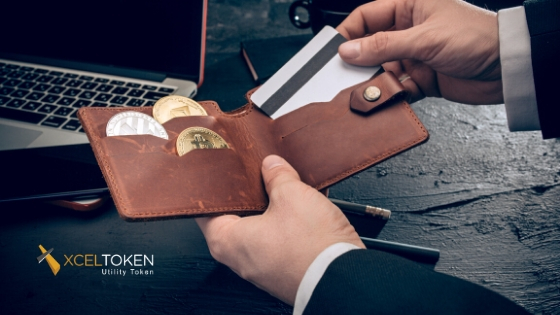
History and the Future of Currencies

Our history book provides us with very little knowledge about how our economy came to be. This post aims to give an overview of how the currencies that we know of today, have evolved and go in detail on digital currencies the present talk of the town and what will become of these currencies. 

After a long period of time, historians, say that societies discovered that they found it safer and easier to exchange goods with goods- the barter system, instead of going into war with each other, frequently traded, between individuals or societies, for other goods were domestic animals like cattle and goats. With the development of farming in the 8th millennium grains were added to the list of exchangeable goods.

It is, only after the trade around the extraction of rich metals that the commodity currencies came to be used, the kingdom of Lidia on the western cost of Turkey is said to have crafted coins that were a mixture of gold and silver- “Electrum”. They were standard in weight; ranging from 0.15 grams to about 14 grams, in irregular shapes and sizes. Aside from Lydia, Greece and a few kingdoms and individuals from China that used coins for trade. The innovation of paper currencies, scholars say, can be credited to the Chinese, as they found it to be lighter auxiliary for coins. The momentum of paper currencies took its time to reach Europe. By 1661 banking institutions had been formed and the government of Sweden issued its own state sponsored banknotes. Further to which the Bank of England was formed. From then on various different world currencies came to use and various laws and policies were created to keep counterfeit and various frauds from taking place.

Subsequently, Paper currencies were normalised and newer technologies have come into play to make transactions easier, digital currencies and E-wallets like PayPal and others are some innovations that are playing a major part in reducing paper currencies in the 2010s.

The initial idea for digital cash, even though a failure, in a way paved the path for the cryptocurrencies to come into existence, people have taken a keen interest in its growth and market, with multiple use cases for them, making it the best time to invest and use cryptocurrency, through your digital cryptocurrency wallet. The blockchain technology that cryptocurrencies are formed in make transaction and trading much safer than that conducted through a bank.

If we went with the idea that “History repeats” we could assume that cryptocurrencies are just the beginning in what will be an economic revolution, where we could expect digital currencies that are far more stable will take the crown from bitcoin. As far as blockchain is considered we could see that the currencies of the future will mostly be utility based where there is no centre that regulates the supply of currency and its value, eliminating the possibility of an economic calamity. All this, however, is possible only with the mainstream usage of the present unit of the beginning stage of the evolution, that is cryptocurrency, this can be achieved only by educating the masses on the benefits of the blockchain system and cryptocurrencies.