Leading Vs Lagging Indicators

Lagging indicators use past price data to provide entry and exit signals, while leading indicators provide traders with an indication of future price movements, while also using past price data. When faced with the dilemma of leading vs lagging indicators, which should traders choose? The answer to this question ultimately comes down to individual preference after understanding the advantages and limitations of each.

Lagging indictors

Lagging indicators are tools used by traders to analyse the market using an average of previous price action data. Lagging indicators, as the name implies, lag the market. This entails that traders can witness a move before the indicator confirms it — meaning that the trader could lose out on a number of pips at the start of the move. Many consider this as a necessary cost in order to confirm to see if the move gathers momentum. Others view this as a lost opportunity as traders forgo getting into a trade at the very start of a move.

Leading indicators

A leading indicator is a technical indicator that uses past price data to forecast future price movements in the market. Leading indicators allow traders to anticipate future price movements and therefore, traders are able to enter trades potentially at the start of the move. The downside to leading indicators is that traders are anticipating a move before it actually happens and the market could move in the opposite direction. As a result, it isn’t uncommon to witness false breakouts, or signs of a trend reversal that just land up being minor retracements.

Source: Google.com

SHOULD YOU USE LEADING OR LAGGING INDICATORS?

There are no perfect indicators. By their very nature, indicators will help traders discover likely outcomes as opposed to a sure thing. It is up to the trader to conduct thorough analysis, with the aim of stacking the odds in their favour.

To further illustrate this point, below is an example of leading vs lagging indicators in EUR/USD, where the leading indicator appears to provide a better signal. Keep in mind that this is purely for demonstration and that the lagging indicator is equally as important.

The market sold off aggressively before retracing to the significant 61.8% level. Using a simple moving average (21, 55, 200), it is clear to see that the faster blue line (21) has not crossed below the slower black (55) line and therefore, this lagging indicator has not yet provided a short signal.

However, upon further analysis traders would be able to see that the market failed to break and hold above the 200-day moving average. The 200 SMA is widely viewed as a great indicator of long-term trend and in this example, is acting as resistance. This supports the short bias for traders eyeing a bounce lower off the 61.8% level.

Traders looking for fast signals will tend to favor leading indicators but can also reduce the time period setting on lagging indicators to make them more responsive. This however, should always be implemented with a tight stop loss to in the event the market moves in the opposite direction.

Traders seeking a greater degree of confidence will tend to favor lagging indicators. These traders often trade over longer time frames looking to capitalize on continuing momentum after entering at a relatively delayed entry level, while implementing sound risk management.

Explained: The Wyckoff Method

One of the most helpful tools I’ve discovered for trading is The Wyckoff Method, created by Richard Demille Wyckoff, a pioneer in the studies of technical analysis, and one of the five “titans” of TA, along-side Gann (Gann Fans/Squares), Dow (Dow Theory), Merrill, and Elliot (Elliott Wave Theory). Below is a summation of what I’ve gathered and factored into my trading.

The Wyckoff avoidance method means to trade only the best assets in the leading market sectors.

Crypto is an emerging asset class, but there are already ways of determining which cryptocurrency has fundamental value. Focusing on the opportunities in those markets makes your decisions process much clearer:

  • You want to buy/hold a fundamentally valuable asset when its price is not reflecting its value yet.
  • You want to take profits and abandon an asset that is appreciating in the short term because of things like tiny market inefficiency or news hype.

FINDING THE MARKET WEAKNESS

You can use any of your favourite technical analysis tools that are good for spotting the weakness of a market — divergences would be a very early sign (and possibly a misleading one) but combined with a three-push formation and lower highs when seen relative to the Bollinger bands would be more reliable.

The general technical gist is that this transition is a substantial one, you should be looking for it on longer timeframes (daily, 3D or weekly charts). The market structure will be similar in all assets in the group you are looking at, but the weakening leader would display the crumbling more strongly.

Another important point in Wyckoff avoidance is to select assets that move in harmony with the market. The bigger picture and relations between different assets of the same class is often overlooked, but it is incredibly useful for market timing.

Assuming we are in a broad crypto bull market, if you can find cryptocurrencies that are performing consistently strong and if you can also find their counterparts, you have your best candidates for your long and short positions:

  • Strong crypto assets rally quite easily. After the rally comes a retrace, but some of the gains remain.
  • Weak crypto assets don’t rally consistently. If they do, the retrace kills all the gains.

On legacy markets, it is easy to compare an asset against a composite index: In a bull market, if an asset trades still well below a known resistance line and gains more than the index, it’s typically the strong performer.

The play there is to buy this particular asset, avoiding all the rest of the assets in its group.

The technically suggested time to sell comes when the price approaches a resistance area. Then you can look which stock was performing poorly in the rally: It’s is going to be the one that should drop the most in the coming retrace and therefore it is technically the best candidate for a short.

We now also have composite indexes in cryptocurrency markets, but the information you can get from them is still fairly questionable. Remember, the crypto markets are still very new.

Wyckoff’s insights are keenly relevant right now, and used well will help you make a good entry point as the bear market plays out its final stages. Add it to your toolbox

Cryptocurrency: A Source Of Passive Income

In order to understand how crypto can become a source of passive income, we must first understand or define what passive income is.

What is Passive Income?

Passive income is earnings derived from a rental property, limited partnership or other enterprise in which a person is not actively involved. As with active income, passive income is usually taxable. However, it is often treated differently by the Internal Revenue Service (IRS). Portfolio income is considered passive income by some analysts, so dividends and interest would therefore be considered passive.

Passive income is a big step for cryptocurrency: it’s about time that people use digital assets productively. There are options that vary in time-intensity to fit one’s investor capacity and crypto needs at the same time.

Cryptocurrencies are complicated so you need to make the point that it could be very easy. It’s common knowledge that institutional investors, specifically from CME, are increasingly embracing the world of crypto. As far as passive income is concerned, institutional clients may be interested in these types of earnings in which case certain conditions are met. For example, the return on investment should be at one level or higher than the return on investment instruments in the classical market. At the same time, risk level must not exceed fiat market risks. Otherwise, investments will be deemed as risky and may be of interest only to highly speculative hedge funds that specialize in this domain.

Staking isthe simplest way to earn passive income, as the market pays you for holding cryptocurrencies for a certain period of time. It offers an investor a potential ROI which is more predictable than others and no investment in hardware is required. Technically, staking means a user stakes his coins to “forge” blocks by maintaining a wallet or node. When staking your coins, investors usually go through a lock-up period while voting — rules on this vary from project to project. After voting, investors get their coins back as well as the staking reward (up to 30% of the coins put in stack). Staking has been misrepresented as the equivalent of a bond in cryptocurrencies. In reality, it is much more of an instrument to participate in the corporate governance of a project and getting paid for it. As mentioned earlier, you don’t need mining hardware because staking is fulfilled via e-wallets.

Blockchain has two layers: application and implementation. The lightning network belongs to the implementation layer or Layer 2. The owner of lightning has the ability to quickly process a lot of transactions. This method does not offer an immediate return on investment; however, they offer transaction fees. Lightning network nodes have strong potential: they are expected to grow in demand within the market. So, if you invest in lightning nodes, your returns will increase in line with their usage maximization.

Here everything starts with setting up automated lending on a crypto exchange platform. AI is used to manage lending operations. Again, the income depends on the amount of your holdings: the more you own, the more AI works for you, and ultimately, the more your passive income is. While the process of lending is fully automated, an investor can take control of parameters — loans can be varied in size and length.

For beginners, here are a few tips to make cryptocurrency a profitable investment.

First of all, always assess the risks cold-headed. You should never invest in an asset if you have heard about or just because it is “hype”.

Secondly, rumours in the cryptocurrency market should be carefully filtered. There is no need to jump on every headline risk before properly checking the news provider and if the story has legs.

Finally, work with credible exchanges — your prudence matters a lot for your own safety and the stability of the entire ecosystem.

Psychology of Financial Markets

Market psychology refers to the prevailing sentiment of financial market participants at any one point in time. Investor sentiment can and frequently drives market performance in directions at odds with fundamentals. For instance, if investors suddenly lose confidence and decide to pull back, markets can fall.

Greed, fear, expectations, and circumstances are all factors that contribute to markets’ overall investing mentality or sentiment. The ability of these states of mind to trigger periodic “risk-on” and “risk-off,” in other words boom and bust cycles in financial markets is well documented. Often these shifts in market behaviour are referred to as “animal spirits” taking hold. The expression comes from John Maynard Keynes’ description in his 1936 book, “The Theory of Employment, Interest, And Money.” Writing after the Great Depression, he describes animal spirits as a “spontaneous urge to action rather than inaction.”

While conventional financial theory, namely the efficient market hypothesis, described situations in which all the players in the market behave rationally, not accounting for the emotional aspect of the market can sometimes lead to unexpected outcomes that can’t be predicted by simply looking at the fundamentals. In other words, theories of market psychology are at odds with the belief that markets are rational.

THEORIES AND TRADING

Some types of trading and or investing approaches do not rely on fundamental analysis to assess opportunities. For instance, technical analysts use trends, patterns and other indicators to assess the market’s current psychological state in order to predict whether the market is heading in an upward or downward direction. Trend-following quantitative trading strategies employed by hedge funds are an example of investing techniques that rely in part on taking advantage of shifts in market psychology, exploiting signals, to generate profits.

Studies have looked at the impact of market psychology on performance and investment returns. Economist Amos Tversky and psychologist and Nobel prizewinner Daniel Kahneman were the first to challenge both accepted economic and stock market performance theories that humans are rational decision-makers and that financial markets reflect publicly available and relevant information in prices (so that it is impossible to beat the market). In doing so, they pioneered the field of behavioral economics (also called behavioral finance). Since then, their published theories and studies on systematic errors in human decision-making stemming from cognitive biases including loss aversion, recency bias, and anchoring have come to be widely accepted and applied to investing, trading, and portfolio management strategies.

PSYCHOLOGY AND CRYPTOCURRENCY

Psychology has a huge effect not only on how we use cryptocurrency but the rate of its adoption in the general marketplace. Understanding these factors can give you an edge in cryptocurrency trading.

While the psychology of traditional investments is well-known and has been comprehensively studied, there are many key differences in the emerging cryptocurrency trading. Still more psychological barriers exist for a widespread crypto adoption in the marketplace. We’ll take a look at some of these different factors, starting with investment in general.

One of the number-one pieces of investing advice you’ll ever hear is ‘don’t invest based on emotion.“ You’ve probably heard that before if you even have a passing interest in investment, but you may not have stopped to think about why.

Statistics show that the majority of people trading financial instruments in any given year lose money. But what separates them from those who consistently gain? The answer is complicated, but can be understood when you examine the psychology that affects our decision-making processes.

FEAR

Fear is one of the most powerful motivating factors in the human condition. Fear of (further) loss is what causes people to sell off during a market downturn or correction. How can you counteract that fear? One way is by not over-leveraging yourself.

That means, only trading, say, 10% of your assets at a time makes you less vulnerable to acting out of fear than if you have 50% or especially 100% of your assets tied up in one single investment.

Investing money that you can’t afford to lose also causes stress and fear to control your decision-making. Even with the best information available and a very sharp mind, you’re not going to make good decisions if you make an investment with your next month’s rent money.

Most consider investment to be a long-term strategy, but many let fear dictate their actions and sell off at the slightest hint of a downturn. Even day-traders follow strict guidelines to take emotions like fear out of the equation.

ATTACHMENT

Another emotion to avoid is attachment. If a stock or asset is performing well, it can sometimes lead you to hold onto it longer than you should. This all depends on your goals, and if that is to make a profit, then you should not get enamoured by a high value.

Remember, the value of stocks does not equate to cash. Set realistic earning targets and cash out your investments when the price meet targets. Then, take a percentage of that and reinvest if you want — but you will protect the majority of your gains.

The psychology of investing and trading financial instruments is a very complex and tricky thing to navigate. Adding cryptocurrency to the mix adds a new layer to these same concepts.

One of the most important things to remember is that you need to protect the bulk of your wealth. Having all your wealth tied up in a volatile investment will lead to decisions ruled by fear.

Focusing on the goal of a crypto-issuing company, and how it is working to achieve that goal are better ways to frame your thinking. If their goal is to build wealth, or just to see cryptocurrency succeed in disrupting the market, the way they achieve that should be the same.

Introduction To Cryptoeconomcs

We often see Bitcoin and other cryptocurrencies like the Wild West: no rules, no social norms, only greed, selfishness and mining. This professed lack of law and order makes the crypto world scary to many people. Nevertheless, in reality, there are rules that govern decentralized peer-to-peer (p2p) networks such as Bitcoin. These rules are coded into procedures and deliver the framework for how contributors of a network interact with each other. They help us create a secure, trustworthy and valuable system, just like laws deliver a framework for a better society. Cryptoeconomics asks the question of how we can design these rules and incentives, so that the networks stay secure and create value for everyone. Cryptoeconomics uses cryptographic tools, game theory and economic incentives to achieve this goal.

The Two Pillars of Cryptoeconomics

Cryptography: techniques that keep messages secure

Economic incentives: rules and rewards that encourage you to add value to the network

In this blog we will specifically be talking about the economic tools of Cryptoeconomics.

Economic tools are incentives that encourage and discourage certain behaviour amongst network participants.

The most basic economic tool is the use of tokens and consensus mechanisms.

Tokens

Tokens are exchangeable goods within the decentralized p2p network. The most famous token in the crypto world is Bitcoin.

Beyond Bitcoin, tokens can be exchanged for a variety of goods and services. For example, you can rent out your excess CPU/GPU cycles via the Golem Network and get paid by the GNT (Golem Network Token) as a reward for your service. The presence of tokens creates a shared value amongst network participants, which makes decentralized p2p networks more like separate economies or ecosystems.

Now let’s see how tokens are used to incentivize desirable behaviour in the Bitcoin network.

Block rewards

Let’s say you are a node that creates a new block to be included in the Bitcoin blockchain. You are rewarded for your work by being allowed to include a special transaction (coinbase transaction). This transaction allows you to send a block reward to your own address. Currently (June 2018) miners receive a block reward of 12.5 bitcoins.

You will only be able to reap the reward if the new block is accepted by the rest of the network. Other nodes express their acceptance by including your new block’s hash in the next block they create. This incentivizes them to only include blocks with valid transactions. Because you believe they won’t accept your new block if you include faulty transactions, you are incentivized to include only valid transactions if you want the block reward.

Transaction fees

As I mentioned above, the block reward for creating new blocks decreases at a set rate, which means that there is a finite amount of bitcoins. But what incentivizes participants to continue building the Bitcoin blockchain and to execute transactions if they don’t get rewarded by being able to mine new bitcoin? Simple: they receive transaction fees for each transaction they include in their block.

Transaction fees also disincentivize participants from slowing down the network by sending transactions from and to their own accounts.

Consensus Mechanisms

Participants in a decentralized p2p network need to agree — they need to reach consensus — about the state of the network and about what blocks and transactions to include on the blockchain. We need a mechanism that helps eliminate issues that arise from decentralization and the possible presence of adversaries.

A consensus mechanism is a protocol on top of the blockchain that takes each node’s proposed block as an input and selects a valid block as an output.

Let’s take a look at Bitcoin’s Proof-of-Work consensus mechanism. Simply put, miners must expend a great amount of computational power to prove they have “skin in the game” and then they are allowed to propose a new block. They expend this computational power by solving hash puzzles that are based on the properties of hash functions I’ve mentioned earlier. I’m not going to dive into the technical details of these hash puzzles but you can read more on pages 64–67 of the Princeton Bitcoin book. From a cryptoeconomics perspective, it is important to note that miners must expense fiat currency to buy computing power (nowadays in the form of highly specialized and high-performance ASIC chips). With that, they have expensed significant resources that they would lose if their block wouldn’t be included on the blockchain.

Another popular consensus mechanism is Proof-of-stake. Generally, this consensus mechanism works by having a set of validators take turns proposing and voting on the next block, and the weight of each validator’s vote depends on the size of their staked deposit. They lose their stake if the block is not included in the blockchain and are therefore incentivized to vote on blocks that include only valid transactions. If you want to read more about Proof-of-Stake, I suggest perusing the writings of Vlad Zamfir and Vitalik Buterin, who are championing PoS for Ethereum (which currently runs on PoW).

Blockchain Use-Case: Gaming

Blockchain technology arrived with numerous blessings and promises for almost every industry on the surface of the earth. In this blogpost, we’ll be looking at its application in the gaming industry and how ambitious players like DAO.Casino are making a mark in the emerging industry.

New decentralized technologies, game developers have found themselves a thriving ecosystem to build upon. Blockchain enables a protocol that allows developers to create decentralized games for users across all industries, particularly in the underserved gambling industry.

Blockchain gaming promises many benefits for the gaming industry, but most of all it benefits the players themselves.

True ownership, decentralized games, provably fair gameplay, acquiring crypto through gameplay (play-to-earn), global leaderboards, censorship resistance, and no infrastructure to manage for the developers, are just a few of the touted advantages.

While all of that is great, the evolution of blockchain gaming hasn’t been so pretty. Several issues that weren’t anticipated have affected the growth of blockchain games, and they threaten to stifle the evolution of this important aspect of the blockchain space as a whole. In short Blockchain Games have just not lived up to their mainstream cousins so far, but there is hope.

Speed

When it comes to blockchain for gaming, perhaps one of the most significant problems so far has been speed. These days, everyone wants a quality, state of the art gaming experience that doesn’t lag or provide any issues with speed and pacing. However, blockchain games that we have today are usually restricted to activities such as trading and creating assets.

Take Crypto Kitties, the most popular blockchain game, for example. The game makes it possible for players to grow and trade virtual cats on the Ethereum blockchain. While it shows a great deal of minimalism, the issue of speed still exists. The Ethereum blockchain is quite fast, but with a block time of 17 seconds, games built on the blockchain are essentially restricted to progressing at least three times per minute and that is assuming the blocks are not full causing even more delay.

User experience (UX)

Onboarding mainstream gamers into a blockchain game and then actually playing the games is certainly not a smooth process.

In the majority of cases players must download the Metamask Chrome extension wallet, generate an address, sign up with an exchange, buy ETH, send ETH to their wallet, and then they are about ready to play, after they have backed up their wallet.

Computational scalability

The advent of smart contracts was revolutionary. Code could be run on the blockchain. This has massive implications for many industries, not the least of which is finance.

However, code complexity is a bigger issue for games. Where financial smart contracts can be relatively small, video games are far more complex. As it turns out, calculating checkmate in a smart contract on the Ethereum blockchain is too complex and impractical. The gas fees would be astronomical just for a simple game of chess, much less MMORPGs.

6 Reasons To Visit Cyprus

From hosting some of the world’s most historic sites to the vibrant Mediterranean culture, the many charms of Cyprus make it an irresistible destination. Here are 6 reasons why you need to include this warm island on your travel bucket list.

Seaside activities

Source: Google.com

Cyprus is known for its beautiful sandy beaches with clean waters — the European Environment Agency recognises Cyprus’s beaches as the cleanest in Europe. For swimming and other water sports, the island boasts over 40 official blue flag beaches. From each city, you can enjoy a part of the Mediterranean Sea, with the most expansive coastlines being Larnarca, Famagusta, Aiya Napa, Kyrenia, Limassol and Paphos.

Weather

Source: Google.com

Cyprus enjoys mild winters, longer summers and short autumn and spring periods. This typical Mediterranean climate is attractive, especially to Europeans wishing to escape bad weather in their home countries. There are generally at least six hours of bright sunshine every day, even in the middle of winter, giving visitors a truly pleasant climate all year round.

The Food

Source: Google.com

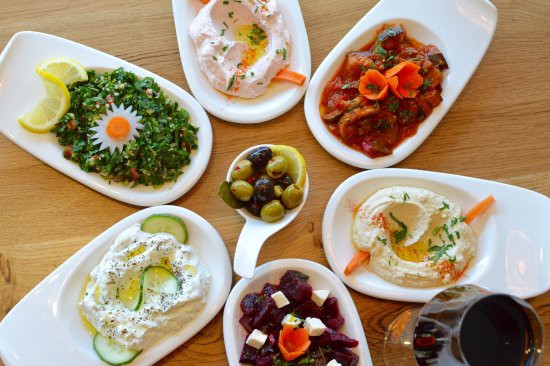
Food in Cyprus is situated at the crossroads of three continents — as a result, its cuisine is a mixture and refinement of a variety of Southern European, Middle Eastern, and Central Asian influences. Locals are known to love vegetables, and this is reflected in the number of vegetable dishes served — whether fried or eaten raw, served cold in cream or with yogurt, or first dried and then cooked, the choice is yours. For a truly local experience, try the much-loved traditional meat or vegetable wraps fillings such as dürüm (Turkish wrap). A holiday in Cyprus wouldn’t be complete without the traditional sweets. Both the Turkish Cypriots and the Greek Cypriots delight in making desserts by dipping a string of walnuts or almonds into fruit juice — mostly grape — with honey, before then being left to dry in the sun. These and other easy-to-make syrupy sweets are often served with coffee or tea.

Laidback Lifestyle

With the world becoming increasingly impatient, stress-filled and anxious, we all need to take a moment to relax and enjoy life. Cyprus offers you once in-a-lifetime carefree and slow-paced days to enjoy long walks by the beach, or to take a ride through the mountains or forests surrounded by flowers and plants.

Great for Nature lovers

Source: Google.com

If you care about Mother Nature, you can enjoy agro-tourism holidays in the heart of Cyprus. Agro-tourism holiday options offer visitors a chance to enjoy the Cypriot culture and rural life like a local. You are free to try your hand at bread making, olive picking or milking the sheep among numerous other activities. If you wish, you can also learn a craft or observe locals as they create artefacts from scratch.

You Can Cover The Island Within A Short Time

Cyprus is relatively a small island — most distances from one city to another can be covered by car, giving visitors the chance to see the island in a short time. How would you like waking up to a traditional Turkish Cypriot breakfast in North Cyprus, devouring lunch at one of the border towns after a visit to theWalls of Nicosia, then later on, enjoying the evening sea-breeze from your beach hammock overlooking the extensive Mediterranean Sea in South Cyprus as you wait for your fresh fish to bake? It’s all possible here. Cyprus, also known as the playground of the gods in mythology, is a land of plenty. Her people are warm, and their friendliness rubs off on visitors. The sun shines almost every day of the year, and the beautiful sandy beaches with clean waters makes it a perfect destination. Moreover, there is a variety of unique and healthy cuisines to pick from.

Use XcelToken Plus on XcelTrip to travel to Cyprus and make memories that lasts a lifetime, if you like our content make sure to follow us on Instagram, for more travel inspiration.

Qawra: A Travel Guide

Qawra is a Maltese resort town popular for its coastal scenery and great value cafes, bars and restaurants. Many of its eateries are within close walking distance of a wide variety of accommodation choices. Accommodation options range from 2 star apartments to 4 star hotels and resorts, so there’s something for every budget.

Qawra is one of three adjoining villages located in the Northern region of Malta along the shores of St Paul’s Bay. Bugibba and St Pauls comprise the other two. The capital of Malta, Valetta, is only 17.6km (10.9 miles) away, making it easily accessible by public transport or the City Sightseeing Malta bus tour.

Qawra Watch Tower (Source: google.com)

In spite of its modern, tourist-centric image, Qawra boasts its fair share of beautiful old buildings. Qawra Watch Tower was built back in 1638 by the Order of St John. The battery was added in 1715. The tower is now home to a restaurant (Ta’ Fra Ben Bar & Restaurant), and the battery a swimming pool. Many visitors find it relaxing to take an evening stroll along the waterfront. Along the seafront you can choose from a wide variety of restaurants for an evening meal or a few drinks.

Malta National Aquarium (Source: google.com)

With its Mediterranean themed exhibitions, Malta National Aquarium is another must-see attraction. A major highlight is the underwater ocean tunnel, where you can walk beneath the waves without ever getting wet! Its on-site restaurant serves a selection of dishes to entice you in after a busy few hours exploring the enclosures.

The shop is well stocked with marine themed souvenirs. There is also a fenced playground for children, a cafe and public toilets in the square outside the aquarium. If you have children aged 6 to 14 years they can even sleep over at the aquarium as part of the ‘Night at the Aquarium’ tour.

Classic Car Museum (Source: google.com)

 Whether you’re a motoring enthusiast or are simply looking to escape Malta’s summer sun, the Classic Car Museum is popular with all kinds of visitors. Discover a remarkable collection of vintage automobiles including many rare models. The whole museum is expertly laid out with vintage clothing displayed alongside the vehicles.

While wandering the streets of Qawra you may be lucky enough to time your visit with one of the many festivals of the Patron Saints. Festivals often feature magnificent firework displays, decorated streets, food stalls and entertainment.

EATING OUT IN QAWRA:

In Qawra there are a number of options for eating out. To dine somewhere with a bit of history you could try the restaurant in the 350-year-old watch tower. Local restaurants tend to have a strong Italian influence yet can cater to most tastes. For example, pizza and pasta dishes feature prominently alongside mixed grills, salads and all-day breakfasts.

Bragioli (Source: google.com)

There are just as many opportunities to sample local cuisine as many restaurants have local options with Bragioli (beef olives), rabbit stew and Lampuki pie (fish pie) being popular choices. Fresh seafood is a common inclusion on most restaurant menus.

Many restaurants located along the promenade offer spectacular seaside views. The Luzzu complex is one such place that’s popular among tourists both international and local. It features a cafe, restaurant and pool (lido) with stunning coastal scenery. Depending on the facilities in your accommodation you may also choose to prepare some meals using supplies from the local supermarkets.

Use XcelToken Plus on XcelTrip to plan your vacation to Qawra Malta and follow this guide to make memories that last a lifetime.

The Parabolic SAR

The parabolic SAR attempts to give traders an edge by highlighting the direction an asset is moving, as well as providing entry and exit points. In this article, we’ll look at the basics of this indicator and show you how you can incorporate it into your trading strategy. We’ll also look at some of the drawbacks of the indicator.

Copyrights @ Unsplash.com

The Indicator

The parabolic SAR is a technical indicator used to determine the price direction of an asset, as well as draw attention to when the price direction is changing. Sometimes known as the “stop and reversal system,” the parabolic SAR was developed by J. Welles Wilder Jr., creator of the relative strength index (RSI).

On a chart, the indicator appears as a series of dots placed either above or below the price bars. A dot below the price is deemed to be a bullish signal. Conversely, a dot above the price is used to illustrate that the bears are in control and that the momentum is likely to remain downward. When the dots flip, it indicates that a potential change in price direction is under way. For example, if the dots are above the price, when they flip below the price, it could signal a further rise in price.

As the price of a stock rises, the dots will rise as well, first slowly and then picking up speed and accelerating with the trend. The SAR starts to move a little faster as the trend develops, and the dots soon catch up to the price.

Understanding the Parabolic SAR

One of the most interesting aspects of this indicator is that it assumes a trader is fully invested in a position at any point in time. For this reason, it is of specific interest to those who develop trading systems and traders who wish to always have money at work in the market.

The parabolic SAR indicator is graphically shown on the chart of an asset as a series of dots placed either above or below the price (depending on the asset’s momentum). A small dot is placed below the price when the trend of the asset is upward, while a dot is placed above the price when the trend is downward. As you can see from the chart below, transaction signals are generated when the position of the dots reverses direction and is placed on the opposite side of the price.

As you can see from the right side of the chart, using this indicator by itself can often lead to entering/exiting a position prematurely. So, many traders will choose to place their trailing stop loss orders at the SAR value, because a move beyond this will signal a reversal, causing the trader to anticipate a move in the opposite direction. In a sustained trend, the parabolic SAR is usually far enough removed from price to prevent a trader from being stopped out of a position on temporary retracements that occur during a long-term trend, enabling the trader to ride the trend for a long time and capture substantial profits.

Markets and the Parabolic SAR

The parabolic SAR performs best in markets with a steady trend. In ranging markets, the parabolic SAR tends to whipsaw back and forth, generating false trading signals. Wilder recommended augmenting the parabolic SAR with use of the average directional index (ADX) momentum indicator to obtain a more accurate assessment of the strength of the existing trend. Traders may also factor in candlestick patterns or moving averages. For example, price falling below a major moving average can be taken as a separate confirmation of a sell signal given by the parabolic SAR.

The parabolic SARis used to gauge a stock’s direction and for placing stop-loss orders. The indicator tends to produce good results in a trending environment, but it produces many false signals and losing trades when the price starts moving sideways. To help filter out some of the poor trade signals, only trade in the direction of the dominant trend. Some other technical tools, such as the moving average, can aid in this regard.

5 Things You Must Know About Croatian Culture

Culture is everything in the Balkans. Croatian culture gets drummed into young people from an early age, an obvious hangover of centuries of occupation and having to fight for national existence. There is plenty to love in the culture, however, especially if you’re into red-and-white checkerboards. What makes the Croats stand out from the pack? In a part of the world where languages intertwine, and much of history is shared, it is culture that separates the Croats from their Slavic brethren. Here are the 5 things you must know about Croatian Culture before vacationing there:

Red-and-white checkered everything

If there is one thing that is synonymous with Croatia, it is the distinct red-and-white checkerboard design that is ubiquitous here. Whether it is adorning the jerseys of national sports teams, the faces of supporters or practically every flag in the country, there is nothing more Croatian than what the local people call the šahovnica (chessboard). The šahovnica has been the symbol of Croatia since the 10th century, although its use by the violently fascist Ustaše organisation in World War II means it is viewed with fear and suspicion by others in the region.

Soccer is life

Many fans were surprised by the Croatian national team’s run to the final of the 2018 FIFA World Cup, but not the Croats. The beautiful game is king in Croatia and has long been a source of inspiration to ordinary people from Osijek all the way down to Dubrovnik. The love and passion are shown in how vociferously the fans protest against the ruling body and the corruption that holds back this already overachieving team.

Eat, eat, eat

Croatians are very proud of their food, and so they should be. The regional influences are embraced instead of being resisted, with little dabs of Croatian class added to great effect. The traditions of Central Europe and the Mediterranean are very much alive in the kitchens of Croatia. It might also seem like there is a never-ending supply of the stuff, and don’t be surprised to come home from Croatia with a bit of extra padding around the waistline.

Family comes first

Family is everything in Croatia. An extremely high value is placed on family relations, and they can often act as the social centre of life in the country. Children often live with their parents until they are themselves married, something that many Western visitors might find a little confusing. This isn’t quite as much about being a ‘mummy’s boy’ or ‘daddy’s girl’ as you might at first think — it is just how things have always been here. Blood is most definitely thicker than water in Croatia, whether they like it or not.

Don’t mention the war

This one isn’t particularly unique to Croatia but bears repeating nonetheless. Do not mention the war. This is little more than common courtesy, and digging up old wounds is a surefire way to create tension and anguish in what may have been a joyful room to that point. If a Croat wants to talk about their experiences, then by all means listen, but do not barge in with opinions based on hearsay from far away.

To experience Culture is Croatia book your tickets with XcelToken Plus on XcelTrip and make memories that last a lifetime.

For your daily dose of travel inspiration, follow us on Instagram